Welcome to the Technical analysis course.
Welcome to the start of your trading journey, where you can follow my process of learning technical analysis where hopefully by the end you will be an intermediate technical analysis expert.
What we will cover and specification:
1.Overview of technical analysis, jobs involved with the trade, and its history
2.Support and resistance
3.Identifying trends
4.Determining the significance of S and R on a chart
5.Identifying different types of trends
6.Momentum and volume
7.What are candlesticks and different types
8.Key indications of a reversal in TA
9.Chart and candlestick patterns
10.Indicators to use and using with different chart patterns
11.Fibonachi retracement
12.When to use indicators together
13.Using different time frames
14.When to enter trades using different chart patterns
15.Setting stop losses
16.Strategies to use in trading
A brief overview of Technical analysis`s history
First of all we will quickly run through a short summary of the history of technical analysis:
The earliest form of technical analysis came from 18th century Japan where a rice farmer developed methods to track price behaviour and trader phycology. For this he is credited for what later became candlestick charts. Later on in the western world technical analysis came in slightly later than in Japan. It was only in the late 1800s and the early 1900s that journalists and market observers started paying on price movements as well as company fundamentals. Soon after "the DOW theory appeared witch was a major milestone for the trade who was also the co founder of the DOW JONES as well as discovering other things like: markets move in trends and markets have phases. A few decades later charting became more systematic and analysts began identifying recurring patterns such as head and shoulders, double tops and bottoms and support and resistance levels. Later on just after WW2 analysts started to use a more mathematical approach by using moving averages, momentum indicators and oscillators. Finally closer to the present day computers came in and online trading platforms using real time data started to appear witch made technical analysis widely accessible and is how you and me are able to do it today.
Jobs involved with technical analysis
Here are some examples:
Technical analyst
Market analyst
Quantitative analyst
Hedge fund analyst
Portfolio manager
Trading educator
Course creator
trading coach
the list goes on....
Overview of technical analysis
Technical analysis is a method of evaluating statistical trends in trading activity, typically price movements and volume to find investment opportunities and determine optimal entry and exit points and the approach heavily relies on past market data.
A more detailed way to put this summary is that TA is used to scrutinise the ways supply and demand for a security affects the price, volume and implied volatility. Furthermore it assumes that past trading activity and price changes of a security can be valuable indicators of the securities future price movements when paired with appropriate investing or trading rules. This is how we can use charting tools to give short term trading signals of where price will go.
This is a brilliant summary of what technical analysis really is but its core principle lies with Supply and Demand. This is why price fluctuates all the time since as buyers buy more shares of a security the supply (amount) of shares available goes down meaning the securities are more rare and therefore more valuable meaning the price will go up and is therefore why price goes up when buying pressure increases.
This can be effectively shown by a simple supply and demand graph from economics.
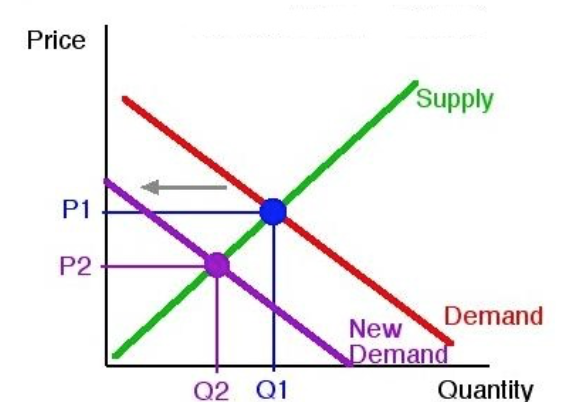
Here you can see perfectly how when the supply curve shifts inwards demand can only meet supply at the new quantity meaning the price for the good and in our case security increases dramatically.
Support and resistance
Now this is where the real fun begins. Support and resistance is one of or the most fundamental part of Technical analysis since it sets the building blocks for the rest of the course.
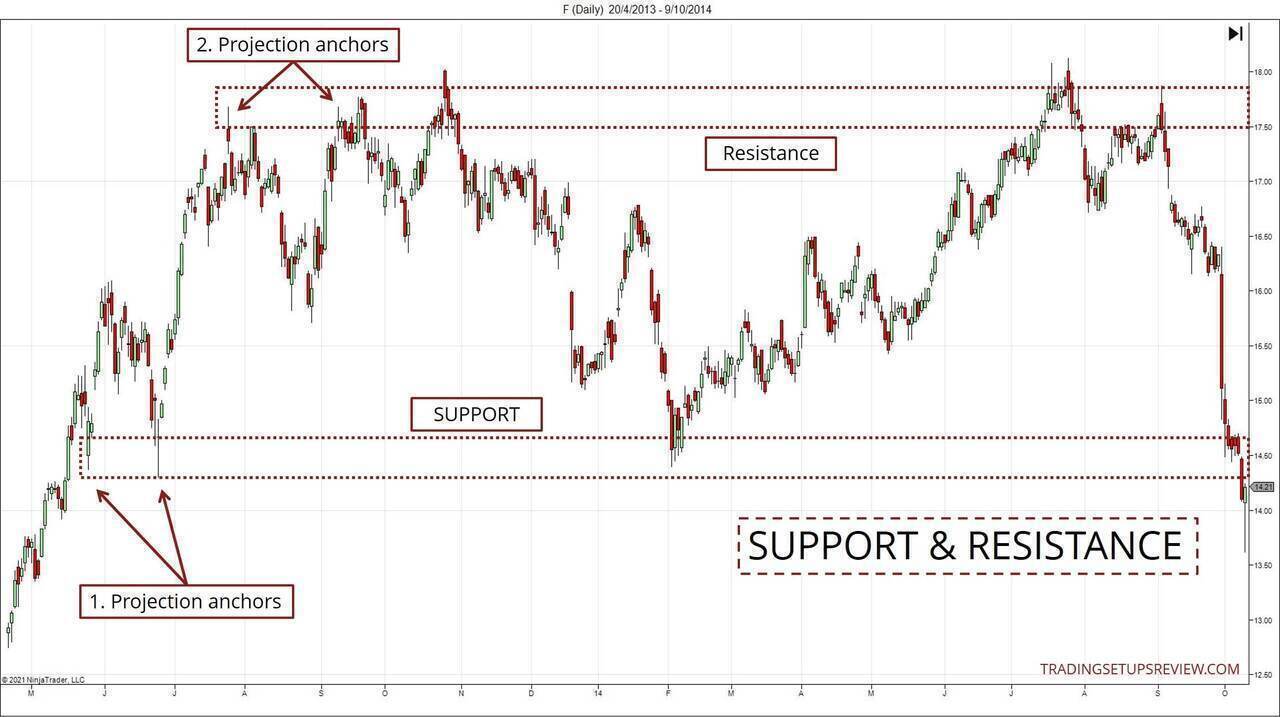
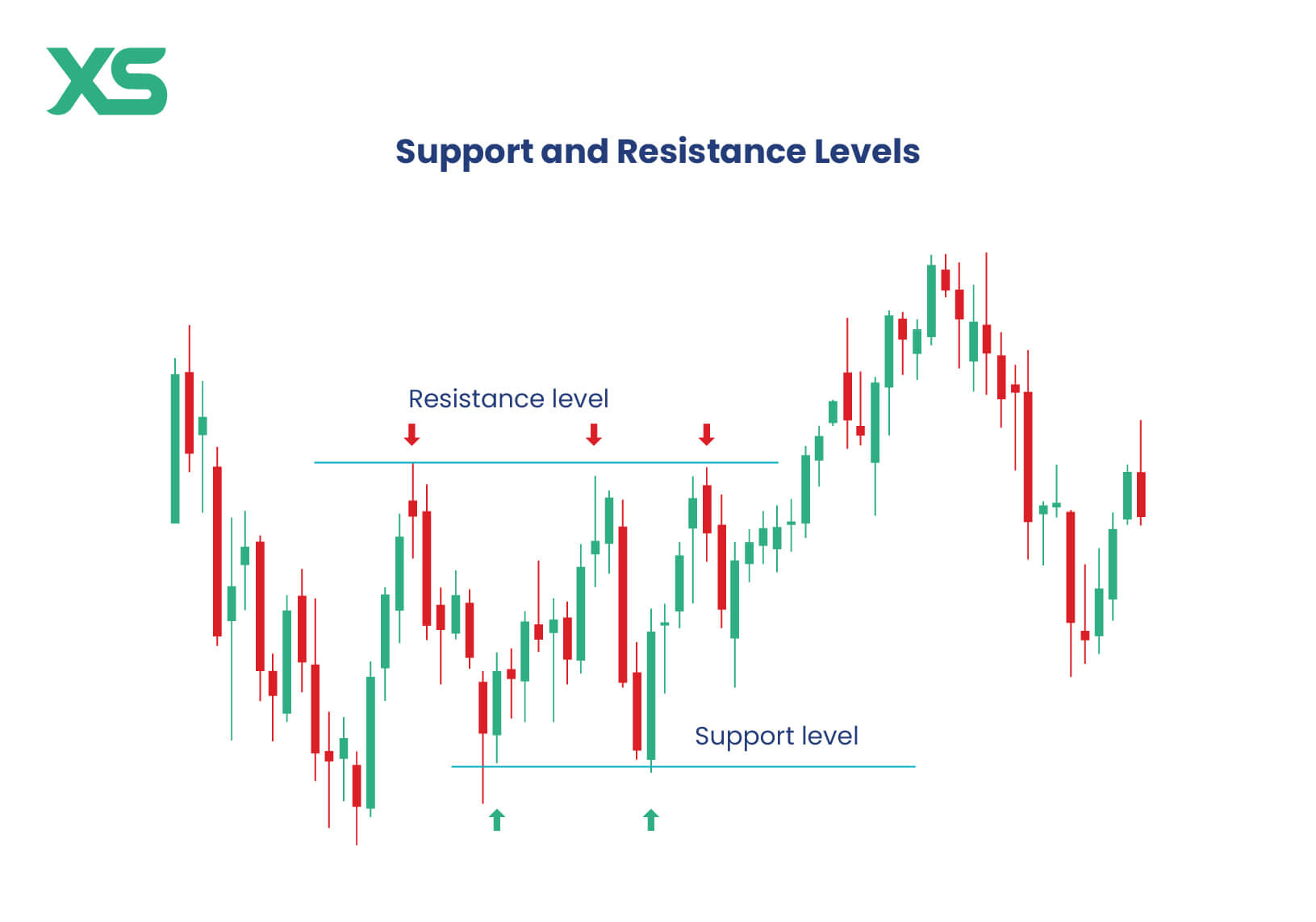
Support- Is a price level where buying pressure tends to stop, pause or reverse (stops the price from falling any further).
Resistance- Is a price level where selling pressure tends to stop price from rising any further.
Why do they occur?
They actually exist because of human behaviour in the market. this is meaning that traders remember key price levels where there was a reversal or a previous support or resistance level and furthermore because of this institutions will place large orders at certain zones strengthening these levels. A key thing to watch out for as well because of this human behaviour is S and R levels are usually near or are round number, For example £300, £550,£70... You get the idea.
How to identify these levels.
Look for multiple touches at the same price level or clear sharp reversals at a specific price.
Support will always come after a pullback (we will look at this in the next section so don`t stress) in an uptrend and a down trend and Resistance will always come after an impulsive move (same as I said before) in both an uptrend and a downtrend.
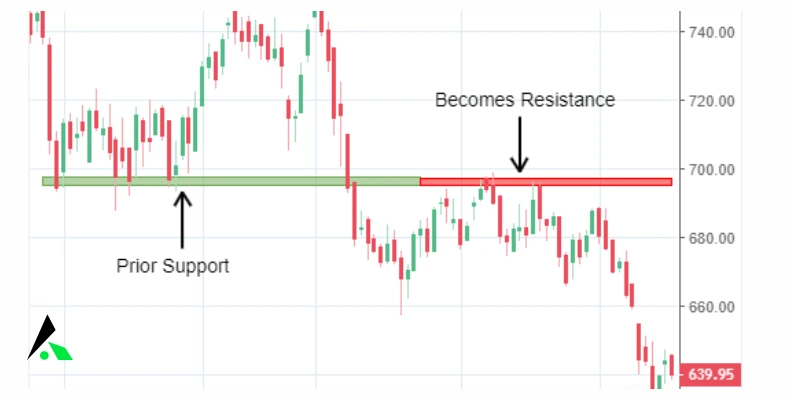
Important rule- Previous levels of resistance often become support in an uptrend and previous levels of support often become levels of resistance in a down trend.
Are these levels lines or zones and what do they look like?
These levels are not lines and that is where lots of beginners mess up, they are actually zones. This is because price will not always hit the same position on a support level but it will hit there abouts, and because if this you need to set your S and R zones thick enough that the level will likely be hit again but not thick enough that the level is no longer valid.
Determining the significance of support and resistance levels.
Here I will go through a few different ways of determining the support and resistance levels as this can be the make or break when determining if the price will break or stick at these levels.
The first and probably most significant way of doing this is by looking at the number of touches the price has had at this specific price. This is because the more times the level is touched the stronger it becomes meaning traders remember this level and will choose to react. 2-3 touches is usually considered strong, however if there is 4 or more touches the level is strong but you should be anticipating a breakout.
The second way of determining these levels significance is by the strength of the reaction. You can assess this by looking at how sharp the reversal is (a strong bounce or rejection). If the bounce is weak or slow this is less reliable and may mean the level is not as strong as previously thought. A great way of backing this up (a confirmation) is by looking at the volume of the bounce or rejection since this should show you the validity of this bounce (think of it as a truth detector) since usually when the volume is high at the rejection point this is a strong indication that the level is strong.
Remember to watch out for round numbers as well since this is where these levels will usually lie and be remembered.
Identifying trends
First of all lets go through the definitions of what uptrends and downtrends are.
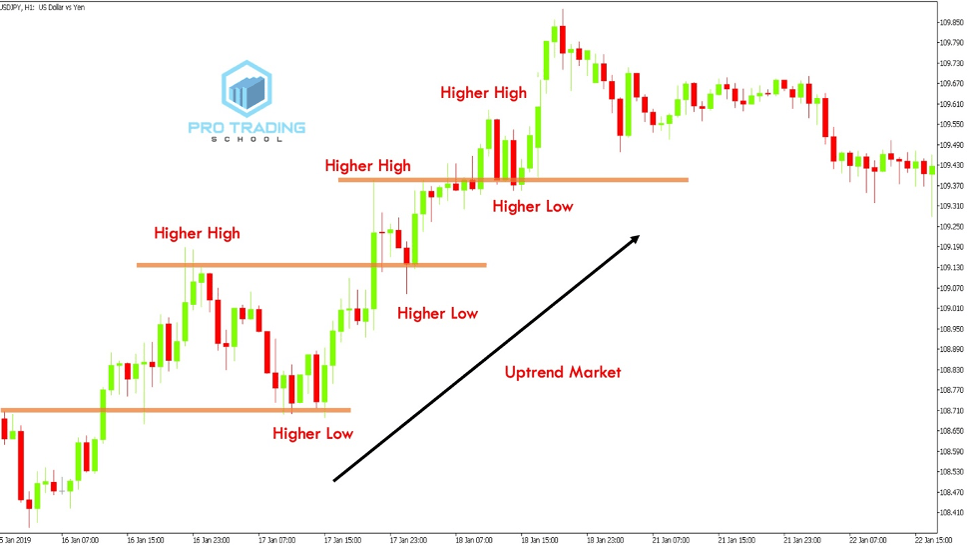
An uptrend is considered an uptrend when the market is making new higher highs and new higher lows.
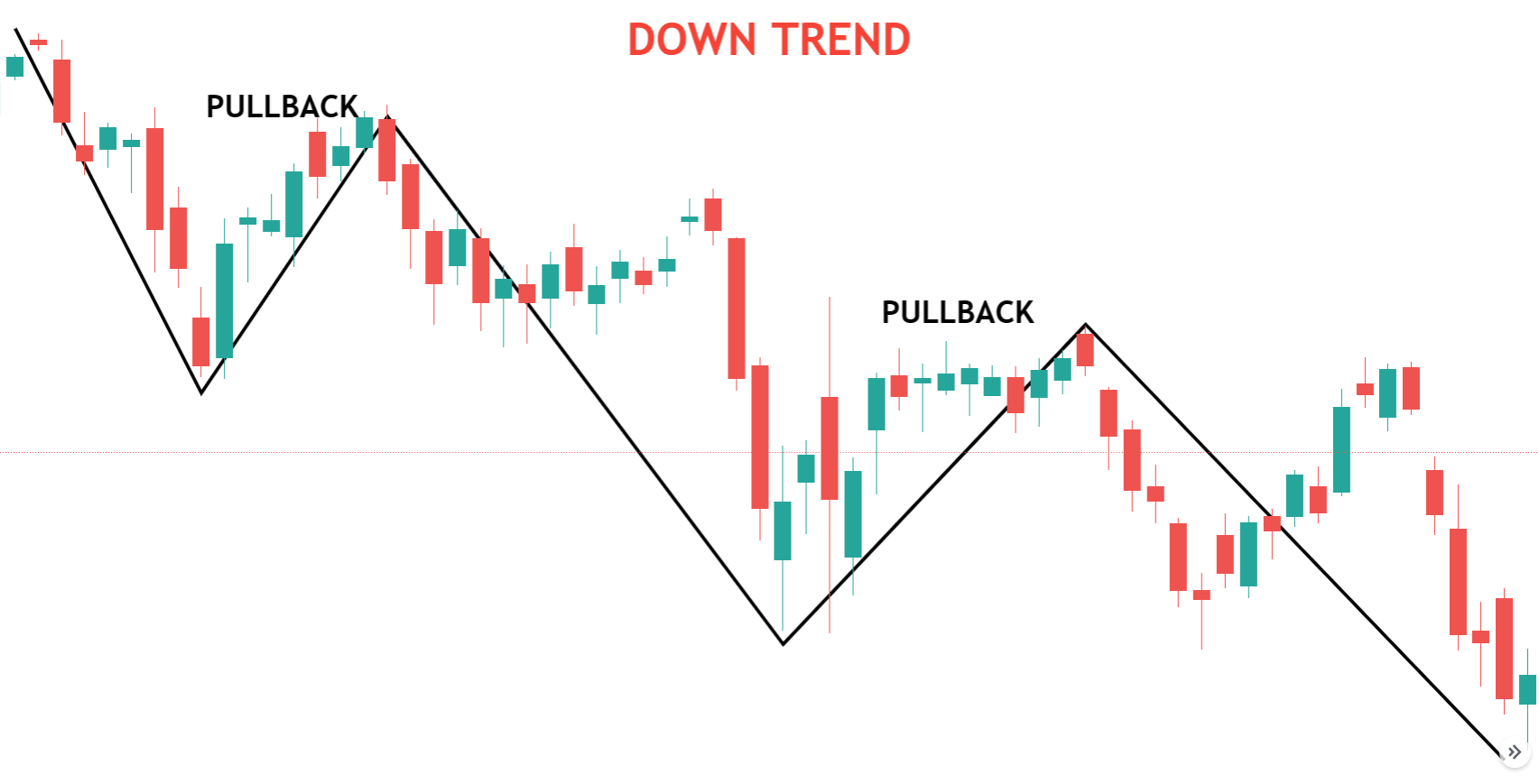
A down trend is considered a downtrend when the market is making new lower lows and new lower highs.
When looking at these two types of trends there are two important concepts when it comes to looking at trends in general.
And that is impulsive moves and pullbacks.
An impulsive move occurs is an uptrend when a new higher high is created over the last impulsive move, meaning the price has moved higher than the last peak before a pullback and in a downtrend impulsive moves are the same but just make lower lows instead of higher highs.
A pullback is the correction and period of unsettlement where selling pressure increases after a recent impulse (in the case of an uptrend).
here you can see in the surrounding pictures some examples of pullbacks and impulsive moves.